springboot三种系统初始化方式解析
1. 第一种 利用 spring.factories
在资源文件目录建立 spring.factories 文件 存入key-value信息
org.springframework.context.ApplicationContextInitializer=com.zhu.ggball.springboot.initializer.FirstInitializer
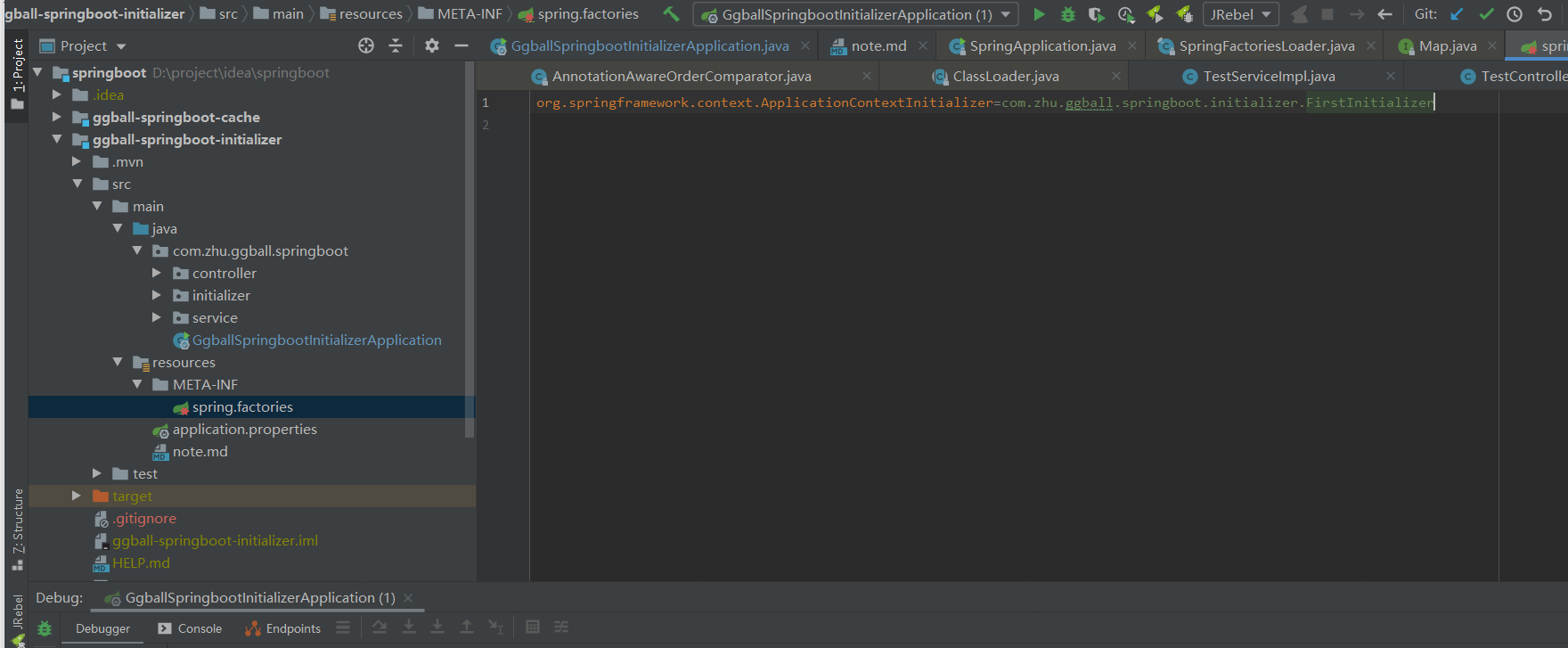
实现 ApplicationContextInitializer 类
/**
 * @program: springboot
 * @description: 第一种初始化方式
 * @author: ggBall
 * @create: 2021-01-13 09:16
 **/
@Order(1)
public class FirstInitializer implements ApplicationContextInitializer<ConfigurableApplicationContext> {
    @Override
    public void initialize(ConfigurableApplicationContext applicationContext) {
        // 1. 获取环境
        ConfigurableEnvironment environment = applicationContext.getEnvironment();
        // 2. 构建自己的属性
        HashMap<String, Object> map = new HashMap<>();
        map.put("key1","value1");
        MapPropertySource source = new MapPropertySource("firstInitializer", map);
        // 3. 加入环境属性集中
        environment.getPropertySources().addLast(source);

        System.out.println("firstInitializer start... ");
    }
}
原理:
启动类 run方法 执行 SpringApplication 构造函数
/**
	 * Create a new {@link SpringApplication} instance. The application context will load
	 * beans from the specified primary sources (see {@link SpringApplication class-level}
	 * documentation for details. The instance can be customized before calling
	 * {@link #run(String...)}.
	 * @param resourceLoader the resource loader to use
	 * @param primarySources the primary bean sources
	 * @see #run(Class, String[])
	 * @see #setSources(Set)
	 */
	@SuppressWarnings({ "unchecked", "rawtypes" })
	public SpringApplication(ResourceLoader resourceLoader, Class<?>... primarySources) {
		this.resourceLoader = resourceLoader;
		Assert.notNull(primarySources, "PrimarySources must not be null");
		this.primarySources = new LinkedHashSet<>(Arrays.asList(primarySources));
		this.webApplicationType = WebApplicationType.deduceFromClasspath();
		this.bootstrappers = new ArrayList<>(getSpringFactoriesInstances(Bootstrapper.class));
        // 设置初始化器
		setInitializers((Collection) getSpringFactoriesInstances(ApplicationContextInitializer.class));
		setListeners((Collection) getSpringFactoriesInstances(ApplicationListener.class));
		this.mainApplicationClass = deduceMainApplicationClass();
	}
获取spring工厂实例对象
	private <T> Collection<T> getSpringFactoriesInstances(Class<T> type, Class<?>[] parameterTypes, Object... args) {
        // 获得 类加载器
		ClassLoader classLoader = getClassLoader();
		// Use names and ensure unique to protect against duplicates
        // 获取 spring.factories key-value对象 存入缓存中
		Set<String> names = new LinkedHashSet<>(SpringFactoriesLoader.loadFactoryNames(type, classLoader));
        // 实例化对象
		List<T> instances = createSpringFactoriesInstances(type, parameterTypes, classLoader, args, names);
        // 根据@Order的value值 排序 越小越靠前
		AnnotationAwareOrderComparator.sort(instances);
		return instances;
	}
// 创建实例化对象
private <T> List<T> createSpringFactoriesInstances(Class<T> type, Class<?>[] parameterTypes,
			ClassLoader classLoader, Object[] args, Set<String> names) {
		List<T> instances = new ArrayList<>(names.size());
		for (String name : names) {
			try {
				Class<?> instanceClass = ClassUtils.forName(name, classLoader);
				Assert.isAssignable(type, instanceClass);
				Constructor<?> constructor = instanceClass.getDeclaredConstructor(parameterTypes);
				T instance = (T) BeanUtils.instantiateClass(constructor, args);
				instances.add(instance);
			}
			catch (Throwable ex) {
				throw new IllegalArgumentException("Cannot instantiate " + type + " : " + name, ex);
			}
		}
		return instances;
	}
2. 第二种 改变启动类方式
改变启动类方式
@SpringBootApplication
public class GgballSpringbootInitializerApplication {

    public static void main(String[] args) {

        // 第一种系统初始化方式
         SpringApplication.run(GgballSpringbootInitializerApplication.class, args);

        // 第二种初始化系统方式
//        SpringApplication application = new SpringApplication(GgballSpringbootInitializerApplication.class);
//        SecondInitializer secondInitializer = new SecondInitializer();
//        application.addInitializers(secondInitializer);
//
//        application.run(args);
    }

}
实现 ApplicationContextInitializer 类
/**
 * @program: springboot
 * @description: 第二种初始化方式
 * @author: ggBall
 * @create: 2021-01-14 09:17
 **/
// @Order Spring IOC容器中Bean的执行顺序的优先级
@Order(2)
public class SecondInitializer implements ApplicationContextInitializer<ConfigurableApplicationContext> {
    @Override
    public void initialize(ConfigurableApplicationContext configurableApplicationContext) {
        // 1. 获取环境
        ConfigurableEnvironment environment = configurableApplicationContext.getEnvironment();
        // 2. 准备资源map
        HashMap<String, Object> map = new HashMap<>();
        map.put("key2","value2");
        MapPropertySource source = new MapPropertySource("secondInitializer", map);
        // 3. 填入环境
        environment.getPropertySources().addLast(source);

        System.out.println("SecondInitializer ... ");
    }
}
3. 第三种 利用 application.properties
利用 application.properties 添加
context.initializer.classes=com.zhu.ggball.springboot.initializer.ThirdInitializer
实现 ApplicationContextInitializer 类
/**
 * @program: springboot
 * @description: 第三种初始化方式
 * @author: ggBall
 * @create: 2021-01-14 09:17
 **/
// @Order Spring IOC容器中Bean的执行顺序的优先级 默认是最低优先级,值越小优先级越高
@Order(3)
public class ThirdInitializer implements ApplicationContextInitializer<ConfigurableApplicationContext> {
    @Override
    public void initialize(ConfigurableApplicationContext configurableApplicationContext) {
        // 1. 获取环境
        ConfigurableEnvironment environment = configurableApplicationContext.getEnvironment();
        // 2. 准备资源map
        HashMap<String, Object> map = new HashMap<>();
        map.put("key3","value3");
        MapPropertySource source = new MapPropertySource("thirdInitializer", map);
        // 3. 填入环境
        environment.getPropertySources().addLast(source);

        System.out.println("thirdInitializer start ... ");
    }
}